‘The trends are screaming out loud,’ Greater Salisbury Committee sounds alarm on child care shortages
Salisbury, Md. – Child care shortages are impacting the lives of Marylanders statewide. However, according to a white paper published by the Greater Salisbury Committee, the shortages are acutely felt on Maryland’s Eastern Shore, specifically in Somerset, Wicomico and Worcester Counties.
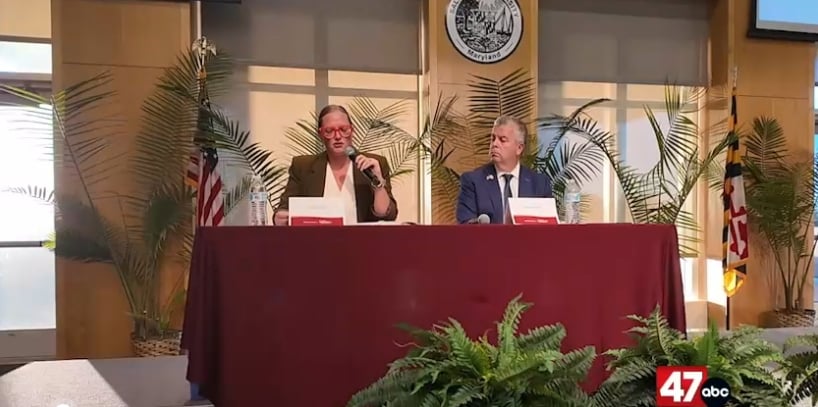
“The trends are screaming out loud that these are dangerous trends,” GSC President Mike Duane said. “Imagine if every day care provider that existed right now, if everybody who uses them went to work tomorrow morning and the daycare center was closed, what kind of impact would that have on our workforce, on families, on the economy? It would be drastic.”
The white paper, published on March 30, says the number of daycare centers for children four years old have plummeted during and after the pandemic due to a lack of availability, access and affordability.
SGC Chair Dr. Katherine L. R. Jones said childcare costs can be even higher than the cost of college tuition.
“The median income in Wicomico County is only $47,500. Infant care is $18,000 a year. Preschool care is $13,000 a year,” she said. “So that definitely, puts the lower shore more at risk. It’s just not affordable for so many of our families.”
Dunn says the impacts of affordability and accessibility ripple outwards, impacting the local economy by making parents ask tough questions about whether or not to return to the workforce or leave the area. This, he said, leads to workforce shortages and the inability to keep talent within the region.
“By and large, we’re a small business economy,” he said. “And so we have a shortage of the large scale employer who could house and take care of the childcare needs of their employees, and then, more importantly, we have a shortage of daycare operators and licensed daycare providers.”
Dunn says staffing shortages are another obstacle in accessing care. The Blueprint for Maryland’s Future creates pathways for educators to get their bachelor’s degree, something that Dunn said has made it harder for professionals to stay in child care. The paper reports that regulations and certain provider certification requirements make those who are qualified leave child care to pursue higher paying positions as teachers.
The white paper also reports another challenge for the centers available is that they are now competing with public school systems. A problem that Dunn says the Blueprint has also exacerbated.
“Those pathways interfered with the private daycare providers who didn’t have to compete with the state of Maryland, if you will, for four-year-olds,” he said. “And so, you know, that’s an unintended consequence of the Blueprint is that it’s put the small daycare centers on notice.”
In addition to being chair for the SGC, Jones is also the executive director for Bay Area Center for Independent Living. She was passionate to pursue research into child care on the lower shore due to her own experience as a professional and mother.
“I’ve been concerned about childcare shortages since the birth of my first child, which was 32 years ago,” Jones said. “It continued to be an issue, as I also had three more children. And so twice in my career I’ve had to stop working in order to be able to be at home, to be with my children.”
She said in order to be at home because she was not able to access child care nor afford it.
“And so this task force just spoke to my heart,” Jones said.
In 2020, she helped introduce a Bring Your Own Baby program to allow employees to bring their children to the office. Complete with playpens, toys and an area to celebrate kids’ birthdays, she said it was a way for parents to work while raising their young children.
Director of Quality Assurance for Supports Planning at Bay Area CIL Tatiana Henry-Taylor has a five-month-old son whom she brings to work each day.
“Even telling family and friends that, yeah, I get to take him with me every day. They’re really shocked,” Henry-Taylor said. She said her friends and family tell her that it is a “blessing” to be able to take him to work.
Even so, she said despite the benefit, she is still getting used to balancing raising her son while trying to get work done.
“Sometimes some days, depending on his mood, it kind of fluctuates with, you know, how in-depth I get with certain things as far as my job is concerned,” Henry-Taylor said. “But because I get to do it every day, it’s learning for the both of us. And I think he’s adjusting well.”
Jones said she hopes the business community will realize the benefit of providing child care for young parents and professionals, rather than hurting the economy and stigmatizing working parents.
“Because when you are a young professional and you do have children that you cannot find child care for, that means you are left with the stigma of having to leave your job, have a big gap in your resumé and then hopefully be able to go back to the same profession that you left,” she said.
She hopes the white paper will lead to productive conversations between local and state leaders, schools, businesses and residents.
“It needs to be brought to the forefront. We’re in a crisis, and the conversation needs to be had,” Jones said.
She will present the white paper and its findings with the support of the Wicomico County Commission on Women to the Wicomico County Council on Tuesday at 6 p.m. She said she aims to also recommend businesses be given tax breaks if they provide avenues for child care.