Salt marsh restoration at Irish Grove Sanctuary
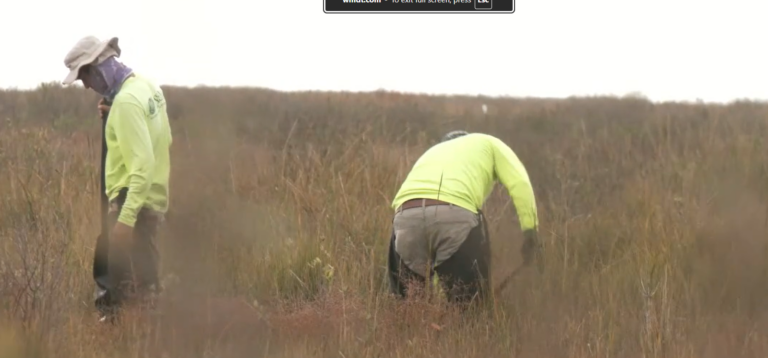
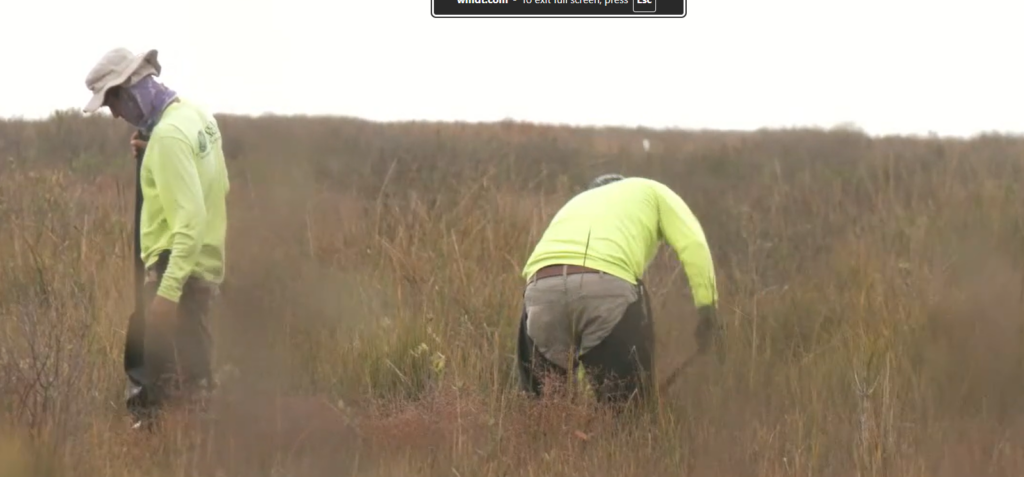
Marion Station, Md. — The Audubon Society broke ground on a salt marsh restoration project at Irish Grove Sanctuary in Somerset County Thursday, as they employ an innovative technique that experts hope to use in mashes around the Chesapeake.
The organization’s project is supported by the U.S. Fish and Wildlife Service and the sanctuary is owned by the Maryland Ornithological Society.
The project is using runnels – thin channels dug in the marsh – which are intended to stop erosion and allow the marsh to recover. It’s the first on-the-ground implementation of Audubon’s Marshes for Tomorrow initiative.
While Audubon said Irish Grove is currently healthy – it’s considered at-risk – and these efforts are intended to protect the habitat of native birds while providing benefits for local communities.
“This is one of the best quality salt marshes in the Chesapeake Bay, but it does have problems and ponds are expanding here. And so our project is designed to halt that process and try to get places where vegetation has died off to actually revegetate,” said David Curson, the director of coastal resilience for the Mid-Atlantic region of Audubon.
As this project is the first step of the Marshes for Tomorrow initiative – it’s a major test for the use of runnels on other salt marshes.
“We’re excited this is the first time that we’re using this technique in this part of Maryland. And for us, we hope it’s a cost-effective way of restoring these marshes,” said Suzanne Biemiller, the vice president of the National Audubon Society.
The organization says the Irish Grove project will be a model for future efforts across the Chesapeake and Costal Bays.
“We need to do this on a much larger scale. But first we have to see if it works. So we have researchers who are out here who are going to be monitoring right throughout the year. And if we find that this is an effective technique, we’re going to be replicating it,” said Genevive LaRouche, the project leader for the Chesapeake Bay Ecological Services Field Office of the U.S. Fish and Wildlife Service. “It’s a low-cost technique and we hopefully will do it in a lot of other areas so that we can affect a lot more acres and a lot more birds and more communities to.”
And the project has benefits for the people in nearby communities with flood reduction and economic opportunity from a thriving wildlife area.
“We feel that by protecting marshes such as this, by trying to restore them, we were able protect not only birds – but protect our communities from storm surges and flooding to have this be a place where people can hunt and fish. And it’s also really important nursery ground for fisheries, for striped bass, for blue crabs, which generate a lot of economic activity in this area,” LaRouche said.