New Report Finds Chesapeake Bay Underwater Grass Increased 7% in 2025, Nearing 2030 Goal

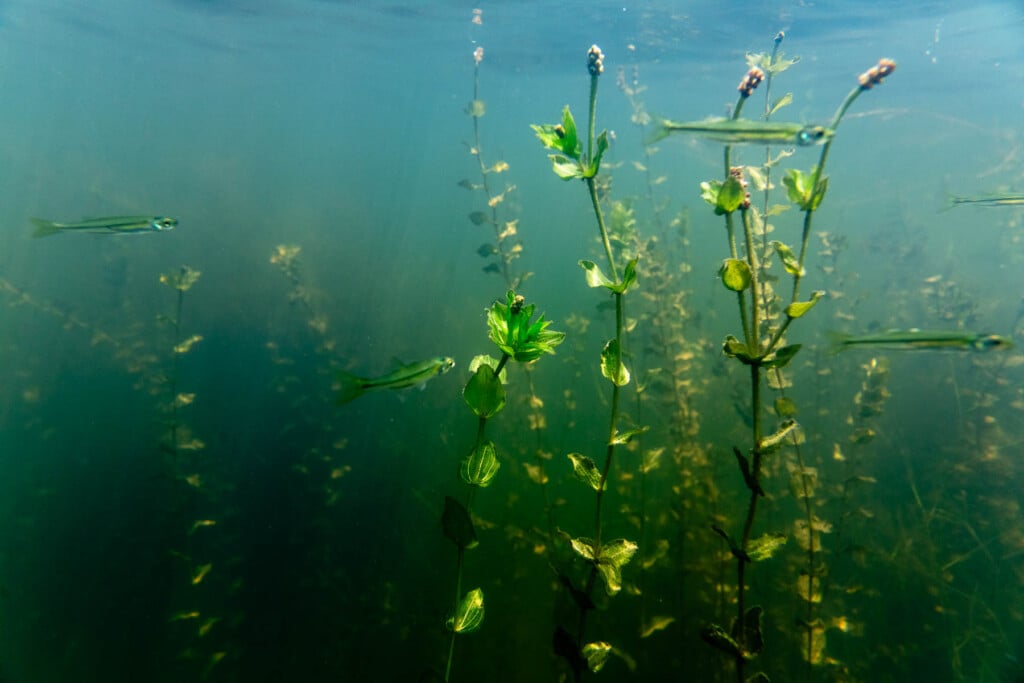
Image Courtesy of Will Parson via Chesapeake Bay Program
CHESAPEAKE BAY, Md. – A new study shows that, in 2025, there were an estimated 89,385 acres of underwater grasses across the Chesapeake Bay and its tidal tributaries, marking a seven percent increase from 2024.
The Chesapeake Bay Program says the growth places the Bay’s underwater grass abundance just 615 acres shy of a 2030 interim milestone of 90,000 acres. Further, it also represents 45 percent of the ultimate, long-term goal of 196,600 acres set in the Chesapeake Bay Watershed Agreement. Underwater grasses are critical to the overall health and stability of the Chesapeake Bay ecosystem, as they help absorb excess nutrient and sediment pollution, add dissolved oxygen to the water, reduce wave energy to help stabilize shorelines, and serve as vital habitat for various species.
“The growth of underwater grasses in the Bay is an encouraging sign of what sustained coordination and investment at the federal, state and local level in Bay restoration can accomplish,” said Dan Coogan, director of the Chesapeake Bay Program, EPA Region 3. “While this progress is important, the work is not finished until we achieve the goal of 196,600 acres.”
Underwater grass levels depend heavily on environmental factors such as water clarity, nutrient and sediment runoff, and temperature and salinity. The Bay’s underwater grasses are monitored each year by William & Mary’s Virginia Institute of Marine Science across four distinct salinity zones.
When monitoring of the Bay’s underwater grass began in 1984, the Bay was estimated to contain only 38,958 acres of underwater grass. Since then, estimated totals have ranged from that historic low to a high of 108,078 acres in 2018, maintaining a long-term average of 70,978 acres.