Kale gleaning ‘win-win-win’ for local community
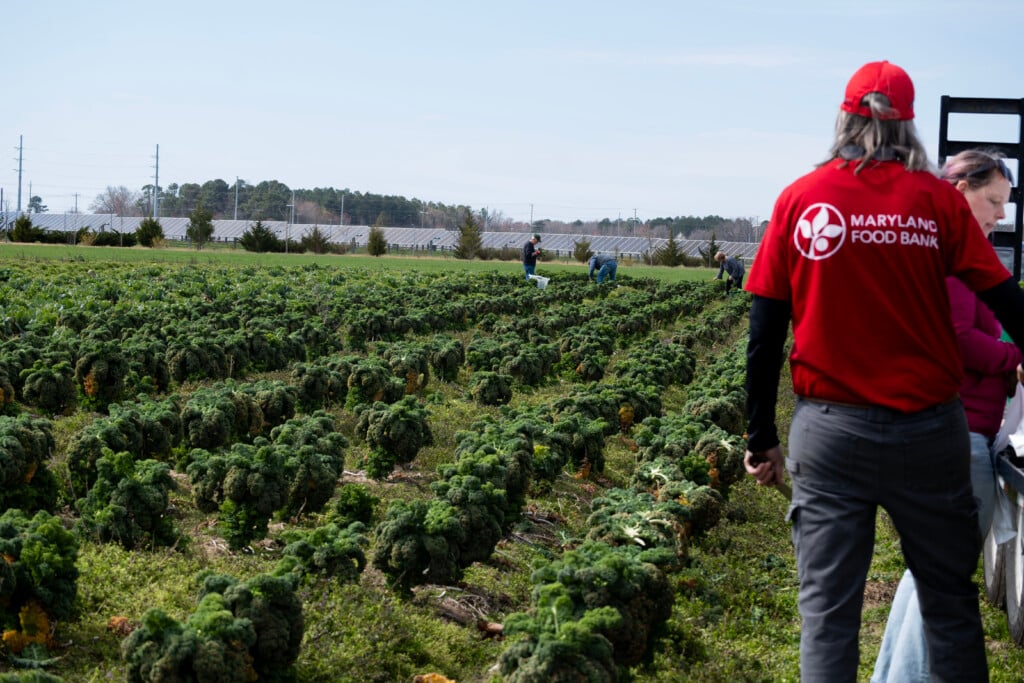
Hurlock, Md. – On a sunny, breezy day food bank, volunteers gathered to glean a kale field. Gleaning, according to Farm to Food Bank Program Manager Amy Cawley, is the practice of picking produce left behind a farmer’s harvest.
The Farm to Food Bank Program out of the Maryland Food Bank engages farms across Maryland to help stock food banks. Crawley says gleanings are key to helping offset costs for food banks and pantries across Delmarva and fight rising food insecurity in Maryland.
“It helps them and helps us save save money,” she said. “We’re also financially strapped a little bit at the Maryland Food Bank, and produce is expensive for us to buy from farmers. So, this helps us save money and helps our neighbors have some nutrients because unhealthy food seems to be the cheaper food.”
Thomas Hill works with the St. Vincent de Paul Food Bank based in Frankfort, Del. and emphasized the importance of stocking up veggies at food pantries.
“We’re giving people the kind of vegetables that they really need to be eating, as opposed to, you know, all the junk food that we’re serving everywhere,” he said.
According to Cawley, gleanings are a “win-win-win” for the community.
“They’re a win for the farmers because they’re not having good food go to waste, they’re not tilling it under, it’s helping feed people and it helps us save money and feed people as well,” she said. “So win, win, win.”
Maggi Gallaher is a volunteer with the food bank and says gleanings are her “happy place.”
“It’s so nice to see this food get to people, instead of sitting in a field or getting turned under because we waste so much food in this country,” she said. “And there’s so much need for food, and there’s nothing wrong with this,” she said while packing up freshly harvested kale into boxes to load onto a truck.
Morrell and other volunteers stressed that being involved with the gleaning made for a full circle moment by helping farmers help food banks help the community.
“There’s always a need and it helps fill that gap when it’s needed,” Jacob Abbott said while slicing a head of kale and tossing it into a cardboard box. Abbott works with PepUp as an agricultural sales representative. “Every time we do this — we do this fairly often — I mean, it just makes you feel good that you’re helping the community out.”
Cawley said she encourages those who are interested in getting involved to reach out. Whether as farmers or as food banks or as volunteers to glean or deliver food can contact her through email at acawley@mdfoodbank.org or find updates on Facebook.